




 1. The Origin of Birkin
The Hermès Birkin Bag is a classic handbag introduced by the French luxury brand Hermès in 1984, named after British actress and singer Jane Birkin.
The birth of the Birkin bag stemmed from a chance encounter.
In 1984, during a flight from Paris to London, Jane Birkin met Jean-Louis Dumas, then the chairman of Hermès. Birkin complained about her inability to find a handbag that was both practical and stylish while also spacious enough to hold her daughter's belongings. Inspired by her words, Dumas invited Birkin to collaborate on designing the ideal handbag. A few weeks later, the first Birkin bag was created and became a legend in the fashion world. 2. Design and Craftsmanship
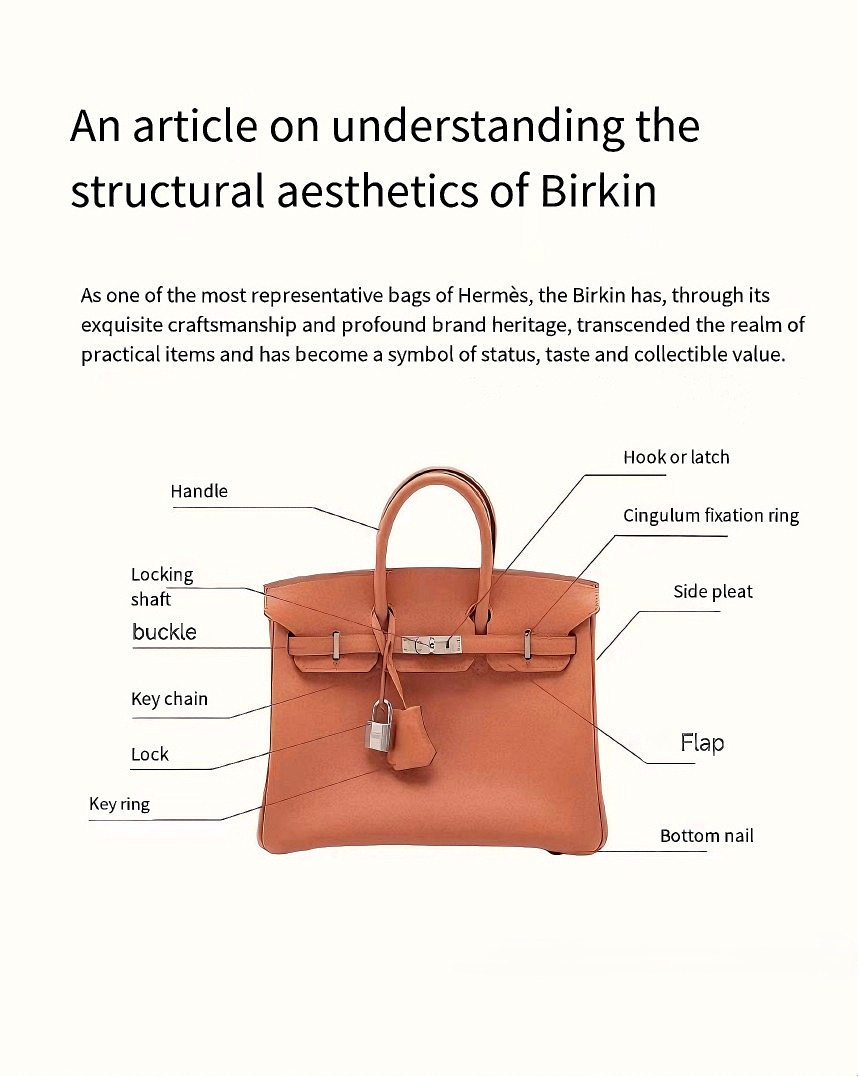
The Birkin bag is renowned for its elegant and refined appearance, practicality, and exquisite craftsmanship.
Each Birkin bag is entirely handcrafted by artisans in France, requiring 18 to 25 hours to complete. The bag body is made from a variety of premium leathers (such as calfskin, ostrich, lizard, and crocodile), and features unique hardware accessories (gold hardware, palladium hardware, rose gold hardware, etc.)
Its ingenious structural design, precise grasp of top-notch materials, and almost obsessive craftsmanship details jointly construct its core values.
3. Rarity and Investment Value
The Birkin bag, due to its limited production, intricate craftsmanship, and high demand, often requires years of waiting in line to secure the right to purchase.
Due to the rarity of the bag and the brand influence of Hermès, the Birkin bag has long transcended the realm of fashion accessories, becoming a symbol of status, prestige, and investment value.
Many limited-edition Birkin bags made with rare materials (such as Himalayan crocodile leather, diamond-encrusted designs, etc.) have repeatedly fetched high prices at auction markets, earning them the title of "art pieces to wear.".