




When you examine an Hermès handbag, the small, often-hidden stamps you find are more than just markings; they are the bag's "hidden ID card" or life record. While Hermès does not officially publish the full meaning of every stamp, years of observation by enthusiasts and experts have decoded many of these symbols.
Here is a quick guide to understanding the key information in an Hermès stamp. The layout typically includes two parts (though format and location vary by bag style and year):
| Stamp Element | What It Means | Details & Examples |
| Year Stamp | The bag's year of manufacture. | Stamped as a single letter. Its appearance (with or without a shape around it) indicates the time period. |
| *Craftsman Stamp | The artisan or atelier that made the bag. | Usually a combination of letters and numbers |
| Special Stamps | Denotes specific types or origins. | e.g., Horseshoe (◡): Special Order for VIPs; Star (☆): Made by a master craftsman; "S": Item from a sale or employee purchase. |
📅 Decoding the Year: The Alphabet Code
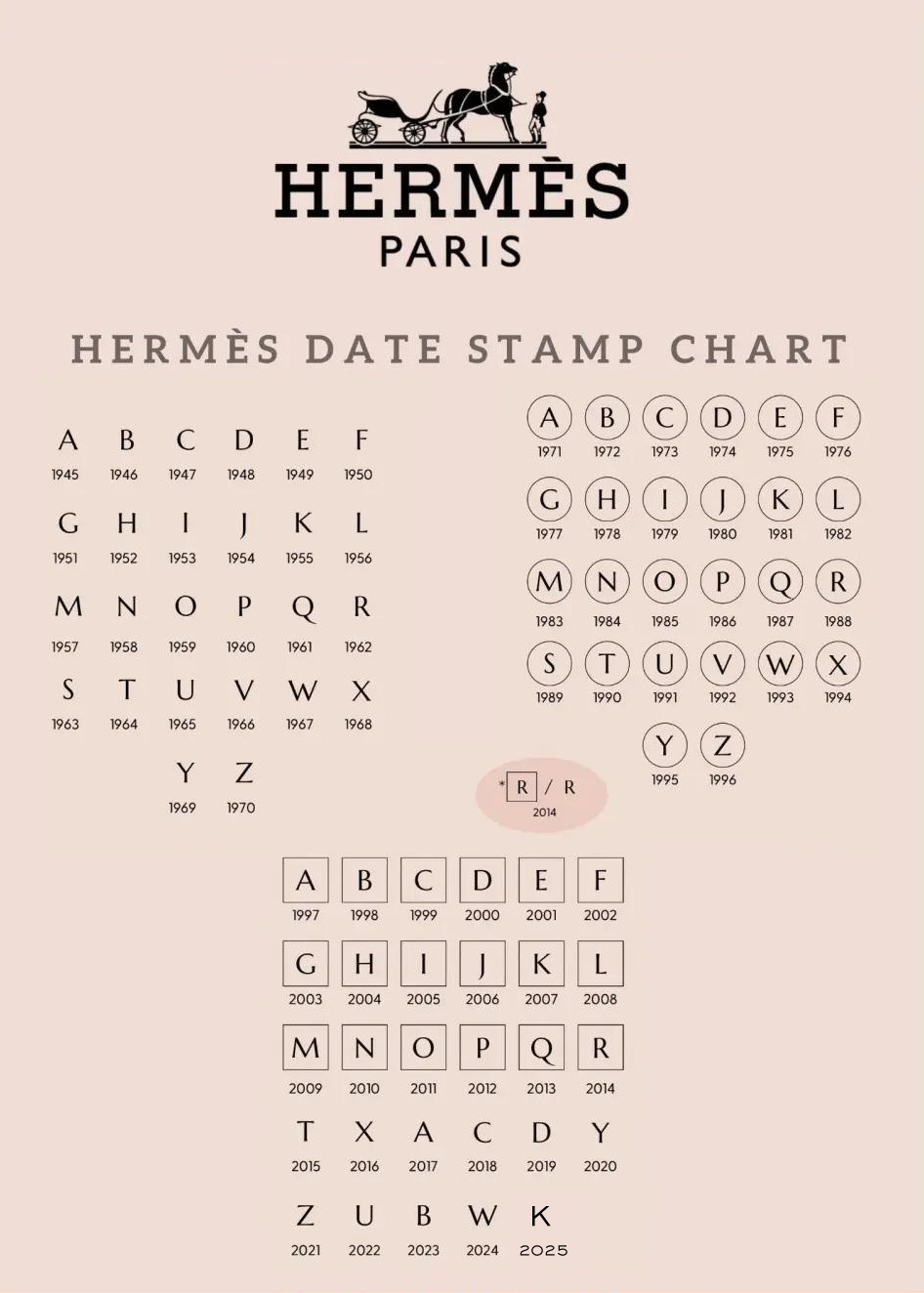
Since 1945, Hermès has used a single letter to indicate the year of production, but the system has changed several times.
| Period | Format | Key Feature |
| 1945 – 1970 | Bare letter (A to Z) | No shape around the letter. |
| 1971 – 1996 | Letter inside a circle (A to Z) | The letter is enclosed by an "O". |
| 1997 – 2014 | Letter inside a square (A to R) | The letter is enclosed by a "□". |
| 2015 – Present | Bare letter (non-sequential) | No shape, and the letter order is random (e.g., 2015=T, 2016=X, 2025=K) to combat counterfeiting. |
Important Note: Stamps from 1945-1970 and 2015-present both appear as bare letters. To tell them apart, you must consider the bag's overall condition, design, and materials.
🛠️ Other Key Stamp Types
Beyond the year and craftsman codes, other stamps tell more of the bag's story:
1.Exotic Leather Stamps: Specific symbols denote the type of exotic leather used.
2.Porosus Crocodile (Λ): Two dots ("⚫︎⚫︎") for shiny finish, caret ("^") for matte.
3.Nilo Crocodile (⚫︎⚫︎): Used in the iconic "Himalaya" collection.
4.Alligator Crocodile (◻︎): Often used for smaller leather goods.
5.The "Invisible" Record: The true power of these stamps lies in what you can't see. They are linked to Hermès' internal archive, recording details like the specific batch of leather and repair history. This dynamic "life record" is nearly impossible for counterfeiters to replicate and is key to the bag's long-term value and authenticity verification.
🔍 How to Find the Stamp
The stamp's location varies by bag model and year. They are often discreetly placed:
Birkin & Kelly: For bags made before 2015, check the underside of the frontal strap. For those made in 2015 or later, look inside the bag on the left side.
Other Bags: Common spots include near the opening, on interior leather tags, or on the back of small leather pieces attached to zippers.
No-Stamp Bags: In extremely rare cases, a bag might lack a stamp due to an oversight or if it was equipped with an RFID chip. Authenticity in such cases relies entirely on professional assessment.
To learn more about the specific stamp location for a particular bag model (like Lindy or Herbag) or to understand how these stamps contribute to a bag's value in the secondary market, feel free to ask.